Tuesday

wherever i'm with you


I practically lived at the neighbors’ blue house growing up. I’d get there early enough on Saturdays to watch PeeWee’s Playhouse (unless, of course, I’d woken up there) and can’t begin to count the hours we spent in costume, lost to our imaginings. She was an only child and their home a charming oasis where classical music soared at the piano, and her mom served hot, homemade Chex mix, fantastical movies, and creativity in every hue. We accompanied her do-it-yourself parents on dozens of trips to Hechinger Hardware, played cards with her Nana, and celebrated Thanksgivings, because that’s what you do when you’re family, even if not by blood.

In high school I joined a Baptist youth group. My Presbyterian self rolled a bit differently, but I barely realized it till years later (when I told my youth pastor, “I followed in your footsteps!” and his eyes widened, confused). Back then we all just loved Jesus and U2 and each other. They were my skiing, singing, shelter from the adolescent storms.

In college, I joined sundry Christian groups full of earnest-hearted girls and irresistible boys with guitars, but when I found My People, they didn’t believe or look all that much like me. They were smaller and darker and laughed even louder, and it never seemed to matter that we weren’t The Same when the dance floor heated up or someone needed a listening ear.

Other times in my life I’ve experienced—or at least suspected—that I’m Too Religious to be accepted by those who aren’t, but finding a home among Christians is tricky too, if you’re deemed Too Free-Spirited or Progressive (or if you’ve been hurt too much or ask too many questions). Alternately, I’ve found myself feeling Too Serious, Too Silly, Too Smart, Too Inexperienced, and altogether Too Much. If only I could somehow make myself less—or more—surely I’d find my place.

But looking back, I have found my heart’s home at way stations along the way, just rarely, if ever, among people exactly like me. When my husband and I left the city for the life bucolic, it took me long and wandering years to find my footing, but eventually we did: at the evangelical camp where we live and work; at our Episcopal country church, among the elderly and empty-nesters; and with friends our age with whom we share secrets and meals and vacations down the shore but not our faith.

I’m increasingly convinced that belonging is more about nurturing creative space together than finding a “tribe” of people Just Like Us. Belonging is cultivated in the fertile soil of hospitality, kindness, and grace, not doctrinal, political, or cultural conformity.

(Anyone who tells you differently is probably selling something, and it’s not the gospel, which is surely not for sale.)

The honest-to-God, Truth-in-Love Good News is that our differences are gifts not liabilities. We need and complement each other precisely because our strengths, perspectives, and experiences are unique. We’re not meant to squeeze diverse passions, personalities, or people into tiny molds.

Folks are disenchanted with Evangelicalism. I get it. Sometimes you gotta get out, start over, and not look back. There’s just one holy catholic and apostolic church, and like the phoenix She’ll outlast every smoldering ruin.

But if there are no standard molds, there are few one-sized-fits-all answers, either. Sometimes we’re just running away, and we can’t outrun our ghosts. Loneliness catches up, and depression descends anew the moment we stop to catch our breath.

At some point, rootedness and growth require staying put, mucking shit, faithful watering, and more patience than we think we can muster.

There is always a death. “Pain is our mother; she makes us recognize each other.”

But we are an Easter people. Joy comes in the mourning. Seasons and families and hearts change. The Spirit whispers, and new life stirs.

Shadows lift at Sunday’s dawn, and the strangers and aliens are found at home at last.


Sunday

in defense of evangelicalism


Labels are a strange beast. As a word-lover, I appreciate their precision, but plenty of people eschew them altogether, perhaps not wanting to be categorized, pinned down, or boxed in.

There is power in naming, which I suspect relates on both counts. Label lovers use them to demonstrate certain understandings of the world or to proclaim integral components of personal identity. Label haters, on the other hand, refuse to allow themselves to be controlled by something so limiting and inadequate.

"Evangelical" is something of a contentious badge these days. The media made it synonymous with the Religious Right of the 1980s onward, and plenty of Christian culture warriors were (and remain) happy to play along, but Evangelicalism's hallmarks are not conservative politics but belief in the authority of Scripture, the Lordship of Christ, his saving work on the cross, and a commitment to conversion and evangelism.

I grew up evangelical, asking Jesus into my heart when I was five. I am well-acquainted with flannel board Bible lessons and Psalty praise tapes. Every summer at camp, I re-dedicated my life to Jesus with my back against pine and tears in my eyes. I signed a True Love Waits pledge and fasted for the 30-Hour Famine with my Baptist youth group. I kept quiet times, prayer journals, and well-marked Bibles. I skanked to the beat with the Supertones and camped the Creation Music Festival. I dragged my longsuffering Jewish friend to a volleyball tournament that included a gospel presentation. To this day, I can't hear "Total Eclipse of the Heart" without flashbacks of mimes falling prey to addiction and gossip. I know my way around Young Life, InterVarsity, Fellowship of Christian Athletes, and non-denominational worship. I crushed on Mac Powell of Third Day and sat through dozens of iterations of a that "I Am a Thief" skit where Jesus is crucified, and you're supposed to feel sad, but it's also confusing because camp's cutest counselor is playing Jesus, and he's not wearing a shirt.

I also technically grew up in the Mainline, but my twenty-odd years in the Presbyterian PC(USA) church were thoroughly evangelical. (I didn't actually meet a bona fide Mainline liberal until I got involved in anti-poverty and peace organizing as an adult.) I didn't feel stifled there as a woman. My gifts for ministry were nurtured and largely affirmed, and I worked as a youth minister my first job out of college.

I still believe in the authority of Scripture and the Lordship of Jesus, but I believe that Jesus is the Word of God to a greater degree than the Bible is, and I have a few more questions than I used to. I seek to understand the Bible in community through the witness of Jesus, historical context, and the arc of the biblical narrative as a whole. My esteem for Scripture is just as strong, but when Truth is understood as a Person, the Bible becomes something more than a textbook. There's more room for mystery, tension, and beauty.

I still believe in Christ's saving work on the cross, but I believe his birth, ministry, and resurrection were significant, too. Jesus wasn't "born to die"--he lived to reveal God's shalom and set right the ill sin wrought. Put to death by religious and political authorities, Christ's resurrection disarmed their violent power, revealing a better kind that makes all things new in humility and love, without coercion.

I still believe in conversion, but less as a once-and-done event. Repentance is an ongoing work, and salvation is not merely for individual hearts or heaven: it's also the liberating, reconciling inauguration of God's reign here, "on earth as it is in heaven."

I still believe in evangelism, but not like I used to when I alienated more than one friend trying to get them to come to Christian events. The gospel of come-to-church-stuff (or go-to-heaven-when-you-die for that matter) isn't the most compelling good news we've got, and honestly, it betrays a certain heresy about where God works and dwells. These days, evangelism looks more like attempting to reveal what Jesus is like and acknowledging the ordinary sorts of places where I see God at work. It's a lot more like regular life.

When we moved here nine years ago (for Jim to work at the evangelical camp where we met and I grew up), we found ourselves most at home at the little country Episcopal church full of elderly folks and empty-nesters. I suppose that means I'm not properly an evangelical anymore, but not because I outgrew it or was pushed away. Evangelicalism was good to me. It showed me Jesus. It still does.

I know a lot of people's stories are different. Many stories involve great pain and loss, feeling chased out or condemned, and those stories need our hearing. They are valid, 100%.

Mine is, too.

***

Some fundamentalists are evangelical, but all evangelicals are not fundamentalist by any stretch of the imagination. Fundamentalism has a unique history and identity, and its emphases on separatism, authority and control, literalism, doctrinal purity, and rigidly enforced boundaries delineating In from Out set it apart from its far less inhibited cousin.

Having grown up and ministered in bigger tents with a considerably more generous orthodoxy, that's not the Evangelicalism--or honestly, the Jesus--I recognize. Since their faith doesn't particularly read like Good News, I'm not sure why the fundamentalists should be allowed to renegotiate the bounds of Evangelicalism.

"Fundamentalist" was originally a self-chosen label, but as it's taken on a pejorative connotation culturally, there is a vested interest in re-branding fundamentalism as evangelical, but any dogged policing of the gates betrays the tell-tale mark of fundamentalism. Fundamentalists are free to assume the evangelical label, but when self-appointed emperors aren't wearing any clothes, we don't have to pretend otherwise or acquiesce to their determination of who's Out.

I don't presume to know if God would have you stay or go. Since denominations, local congregations, personal experiences, and tipping points vary tremendously, there will be few universal answers for the faithful navigating the minefield that is Evangelical Christianity in this post-modern age. The Spirit may make it clear to you, or She may feel a million miles away, but I trust you'll know your next steps better than any random blogger on the interwebs. But if the gatekeepers can't kick us out, the leavers can't drag us out either. Go or stay; there are a million ways to be faithful.

Here's what I do know: Christ has but one Church, and for better or worse, we're family. Fundamentalist, Evangelical, liberal, Catholic, missional, Mainline, conservative, charismatic, Anabaptist, Orthodox, Reformed: we're sisters and brothers. We can disagree, drop, and pick up new labels and traditions, but as long as we're following Jesus, there's no escaping the fact that we're keeper and kindred, meant to live and bear the Good News together. We belong to one another.

At the end of the day, these labels matter little. It is by love we're called to be known, and we've got a world of work to do.

Post-script: After the 2016 election, I no longer believe the evangelical label to be worth salvaging. Christ exists outside that bedded-to-empire mess, beloved.

Thursday

a way in the wilderness


This is my body, broken:
pierced and bleeding, shrouded
in darkness and alone

Eloi, Eloi, lema sabachthani?

Father-forsaken, the Light recedes.  
Rocks cry out, the curtain tears,
brave women do not flee.

This is my Body, broken:
my radiant Church lies 
pierced and bleeding, wounded 
by friendly-fire burn

This sickness shall not end in death

The dead are raised, the blind will see and 
you, love, shall be healed (only say the Word).
You are No Longer Deserted, re-created, 
the very image of God

See, I am making a way in the wilderness,
streams in the wasteland

Hephzibah, my delight: rend your heart 
and not your garments. Rend your heart 
and not your brother. Every blood
soaked strand is fuel for the fire

Take off the grave clothes

Put on the new self and arise. Only
love will bind my Church in perfect unity.
Bind up the brokenhearted and return 
to me, the Spirit poured-out-still.

There is one Body and one Spirit; to 
one hope were you called. At 
one Table we celebrate your redemption

As the Father has sent me, so I am sending you

I Am the Word, calling 
life from formless void.
I Am the Truth, revealing
the invisible God is Love.

Unbound, embody your blessing:
light up the darkness, Beloved.

Do this in remembrance of me


Reworked from the archives, for weary hearts. Image: purolipan

to one hope She presses


There is a time to kneel and a time to stand, and we stand for the Gospel and the Nicene Creed. With red prayer book in hand or heart, we recite the words that crossed the lips of fourth century Christians and rise today in congregations across the globe. 
We believe in one holy catholic and apostolic Church.
We believe together and affirm it as one, unlike the “I” of the Apostles Creed I grew up memorizing, the “I” of Protestant work ethic and personal salvation. With the Nicene Creed, we gather and we believe, we empty-nesters and octogenarians, families, friends, blue bloods, and the 47%.
There are times we believe on each other’s behalf, like the men who brought their friend to Jesus, lowering him through the roof tiles: “When Jesus saw their faith, he said to the paralyzed man, ‘Son, your sins are forgiven.’” It was their faith that sparked his healing, body and soul.
I believed for you when your heart was fearful. You believed for me when my foot slipped. We steady the knees that give way; we speak and believe.
We believe in one holy catholic and apostolic Church.
We recite the Creed every Sunday, even when the diocese schismed and hearts rent. It was a divorce from which our community has yet to fully recover.
But there were streams amid desert as saints kept their watch. The men’s Bible study never stopped gathering at the Christian camp for coffee and prayer. The generous buoyed the struggling, as always, and we celebrated, grieved, and served together, because there’s always been more that unites us than that which divides. Christ’s diasporic Church is catholic still.
We believe in one holy catholic and apostolic Church.
We speak the words like prophesy. Like the Word, we exhale life, ordering the chaos. There is
One Lord
One faith, to
One hope are we called
One baptism
One Body, many gifts.
One Giver
One work
One Table
One Church
Jim Wallis is known for saying, “Hope is believing in spite of the evidence and watching the evidence change.”
We do believe, LORD. Help us overcome our unbelief.


Monday

and the beat got sicka

On my nightstand:

At the Dark End of the Street: Black Women, Rape, and Resistance: A New History of the Civil Rights Movement from Rosa Parks to the Rise of Black Power. This book is incredible, and I'm only a few chapters in. A painful (and potentially triggering) read, certainly, but it tells a crucial side to the civil rights movement that is largely missing from popular history, illuminating many of the activists, newspapers, and organizations that fought tirelessly against sexualized violence and for racial justice. Many thanks to Austin Channing Brown who tweeted the NPR piece on Parks' activism that led me to track it down.

The Fault in Our Stars undid me. I can't recall sobbing at a novel like that since Bridge to Terabithia when I was ten. It's a good one, particularly if you have a fondness for catharsis or YA fiction.

We've also been reading lots of kids' lit. Our library is always such a treasure, but when the weather's this terrible, it's a lifeline for which I am tremendously grateful.

On TV:

My favorite show right now, hands down, is Pretty Little Liars. Make of that what you will, but if you've never seen it, I'm jealous that you have four seasons on which to potentially binge, while I have to wait a whole week for one measly hour. It's a soapy teen mystery set where I grew up, everyone has glorious hair, and it's pretty much the best.

I'm so glad Scandal returned, but I wish the Gladiators would get back to working cases, cuz I'm not here for President Fitz's White House woes. Or Quinn. She may even be worse than Fitz.

Jessica and I've been watching Veronica Mars, swooning over Logan, and getting pumped to see THE! MOVIE! that Kickstarter built. Yasssss.

In my ears:

Mostly Beyoncé and entirely too many pre-school singalong renditions of Let It Go. Live Decemberists in the car. Rinse. Repeat.

On the interwebs:

On the blog:

We celebrated six years here. (What.) I wrote about baptized abuse apology and the dawn of something better. And I had posts up at A Deeper Story (Out of Ash) and one at Missio Alliance for their Christianity & Violence Series (Christians, Stop Shooting Our Wounded).

[I did pick party favor winners and will be notifying/mailing shortly: Sarah H, Diana, Christina, and Alyssa. Thanks, everyone!]


On the home front:

Dylan is six, and James is four. We seem to be growing out of some of the eating battles and power struggles and discovering a happy new normal, and it's a beautiful thing. Also, they are now both old enough to go to the YMCA's monthly babysitting night and our friend's weekly youth club, which means that Jim and I have gone out more in the past few weeks that we have in the entire first few years of parenting. Having big-little kids is a game-changer, man. Love.

We booked a house with friends on the Jersey Shore for August. Dreaming of bay view balconies and warm sand beaches and remembering it won't be snowy and sub-zero forever.

Fifteen chirping baby chicks camped out in our bathroom 'til the weather warms:


On the horizon:

Spriiiiiiiing. (Let it be, Lord.) Lent. Mah birthday! Tapping trees. Reading Micha Boyett's Found. Seeing Arcade Fire--with tickets I won:) It's gonna be a good March.

What are YOU looking forward to? Did you watch the Oscars last night? I thought it was a really fun show, even though I've barely seen any of the recognized movies. What was your favorite film/dress/speech/anything? What are you reading, watching, or smitten with of late?


What I'm Into  
{image: ModernGrandma on Etsy}

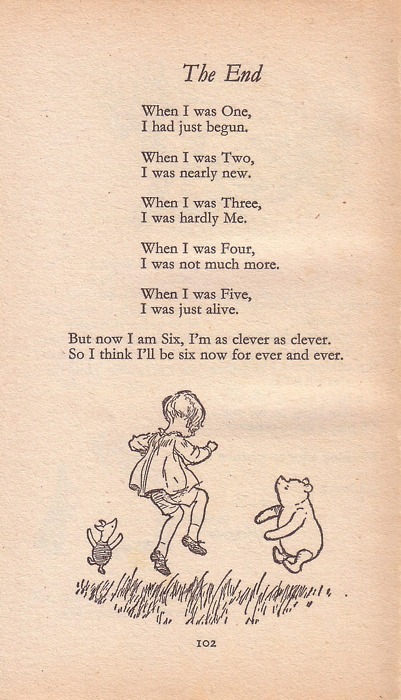
now we are six {with party favors}


The Smitten Word, like our firstborn, is a kindergartner. Seven hundred seventy six posts (with a little help from my friends) was never something I fathomed when I began writing here on a whim six years ago, but this remains a favorite space to flex my creative muscles and connect with you. The early years had more parenting and natural living, but we've always wrestled together with embodied faith, poetry, feminism, media literacy, peacemaking, justice, and what it looks like to be the Church.

I'm grateful to everyone who's been along for the ride. You make it fun, and to say thanks, I've got a few party favors up for grabs. Leave a comment, and I'll pick a few winners at random on Thursday at midnight. Happy Monday, friends.


hard copy of The Fault in Our Stars
12 oz coffee, porch-roasted by Jim
1/2 pint maple syrup, tapped in our yard


Wednesday

out of ash


The trunk is full of clothes for the Salvation Army, and the recycling overflows. Mail piles, junk drawers, closets, toy bins: it’s all fair game. I’m the culling, sorting, take-no-prisoners arranger of disorder.

Well, today I am. Even Type Bs have their breaking point, somewhere between la vie boheme and utter chaos, and I found mine sometime after the furnace broke and the vomiting started.

Three day weekends aren’t the same once you have kids. I mean, it’s a long weekend all right, but not like it used to be when we’d stay out late, just us, and linger in bed all day next. These days, Jim works weekends, and I’m home with the monkeys, who are too sick for adventuring but not too sick to bicker and pick each other raw.

Try as I may, I can’t make them calm their hearts, but if my counters are clear, perhaps I’ll calm mine. Our house, which lately looks like it’s been hit by a tornado, is a metaphor for every furious squall I can’t control, so I’m starting with what I can. One shelf. One dresser. One pantry.

We lit a bonfire with the Christmas tree and toasted marshmallows in the flickering blaze. I’m tackling my temper next. Every blood-soaked strand is fuel for the fire.

Forget the former things;
do not dwell on the past.
See, I am doing a new thing!
Now it springs up; do you not perceive it?
I am making a way in the wilderness
and streams in the wasteland. (Isaiah 43:18-19)

A way through the wilderness. Streams amidst the wasteland. I’m trusting spring lies waiting beneath winter’s dormancy and toasting to cleared clutter, setting fires, and the new life which arises out of ash.

Friday

tell it & think it & speak it & breathe it

[Content note: abuse apology, victim blaming, rape, child abuse]


I'm not much of a crier, not typically. Although my heart could burst sometimes for how deeply I feel injustice, my eyes are far more likely to flash with anger, passion, or mischief than spill hot with tears. And yet yesterday found me weeping, racked with sobs twice. I cried reading The Fault in Our Starsand later upon receiving a maddening email from a stranger.

He had written a post condemning scripture's Esther for joining a pagan king's harem and bed. According to the writer, she could and should have refused the king to keep herself "pure," and failing to do so made her a "complicit adulterer." Nevermind that one was a powerful sovereign and Esther a foreign girl descended of political captives, or that women were considered men's property and without rights, or that the modern concepts of consent and bodily autonomy didn't even exist. (They barely exist now, particularly in many Christian circles!)

[You can read the post here, but know it may be triggering. It's worth noting (although the author doesn't) that the post's parenthetical note appeared this week and was not original to the piece.
The author unconvincingly suggests that believing Esther to be anything other than sexually sinful requires believing in perfect heroes, and oddly, he then paints abusers as "monsters", as if abusers (or abuse/rape apologists for that matter) are not also the sorts of ordinary people we know, work with, and love.
Abuse is predatory, devastating, and unconscionable, surely, but conceiving it as something committed exclusively by monsters leads us to disbelieve victims. ("But he's such a nice guy/ talented man/ respected leader! You must be confused/ overreacting/ imagining things/ lying.") The late addendum doesn't rectify the post's mixed and destructive teachings about gender, sin, and sexuality.]

The author illustrates his point with the story of a woman who was raped as a teenager by her uncle. According to the author, the woman felt complicit in her uncle's abuse of her and found hope in the story of Esther, whom God used despite her "brokenness." The author initially presented this narrative of child victim complicity not only as fact(!) but as something seemingly intended to encourage and teach a lesson: even the most sexually compromised sinners can be redeemed! Glory!

The post had me shaking when I read it the first time and again this week when a new comment addressed to me hit my inbox. This theology isn't just bad: it's abuse apology and victim blaming cloaked in the language of religiosity and grace.

Sexual abuse survivors who have been sinned against require no one's forgiveness. We who miscast blame, heap shame, and side with the powerful and the perpetrators--we are the ones in need of repentance and atonement.

***

When reading Dylan Farrow's description of being abused by her father, Woody Allen; the Vanity Fair profile from 1992; or the recent shitstorm of doubt passing itself off as objectivity, my heart breaks into a million pieces for all the hurting kids who are never to blame for what happened to them, for the ones who never tell, and for those who did and we chose not to believe.

We have a daughter named Dylan, too. At six, she is a voracious reader with sea-green eyes, a playful imagination, and an startlingly sharp mind.

The dark outside is thick like smoke, and I choke to find my breath.

***

The author of that post sent me an email explaining that my comments were deleted because I used "inflammatory language." Perhaps I could have worded things a little differently, he suggested, in order to appear less harsh and encourage more dialogue in his comment section. He even supplied a sample script I could have used.

His email was extraordinarily polite and quite nice in fact, but it was also an outrageously silencing and presumptuous adventure in missing the point. I had been careful with my words. In print, I am nearly always careful with my words. (It is a significantly more difficult task in speech!) I hadn't called names, assigned motives, attacked anyone's character, or engaged in any otherwise untoward rhetorical tactics.

The thing is, I have zero desire to engage in a dialogue about whether or not survivors are complicit in their own rape and abuse, because survivors are not complicit in their rape or abuse. Rapists and abusers are the ones to blame for raping and abusing. Full stop. No apology.

Is that harsh? I can think of a number of things that are considerably harsher, particularly sexualized violence and the cultures and theologies that support, excuse, and enable it to hide and even, to thrive.

When what we are taking about is young people coerced into abusive, exploitative, non-consensual, illegal, and violent sexual experiences, I have an exceptionally hard time imagining that God cares much about optimizing niceness or even fostering dialogue.

The love of Christ looks far less like monitoring language for civility and more like identifying and subverting oppressive power dynamics, holding abusers accountable, supporting (not re-victimizing!) survivors, and transforming rape culture into something far more reminiscent of the resurrecting, upside-down Kingdom of God.

***

I cannot change, control, or be held responsible for another's actions; I am solely responsible for my own. This realization can be tremendously liberating (particularly within purity culture that blames women for men's sins), but as parents it can be extremely hard to accept that we cannot control either what our children do or what happens to them.

We cannot shield them from every shadow or protect them from every harm, but we can raise our voices (and a ruckus if need be). We can grieve each other's pain and celebrate each other's joy.

We can't stop the darkness from falling, but we can kick at it 'til daylight bleeds though.

We can listen to survivors. We can trust children. We can light candles and a better way together.

Children of the Light,
love the day and Dayspring
and each one as ourselves:
beloved, transforming, and renewed
like the dawn of something better

Related Posts Plugin for WordPress, Blogger...