Tuesday

gospel of matthew resonate series: commentary for every(wo)man {not just nerds}

a book nerd from way back, i spent many an evening hovered near the bathroom nightlight, racing to finish just one more chapter.  my elementary school librarian still knows my name.

in college, i embarked haphazardly on a history degree but soon accumulated enough religion credits to warrant a double major.  new testament history opened another realm of ways to geek out, and my desk was always piled high with research.

after graduation, i took a job directing a youth ministry.  hanging out with students gave me excuses to watch teen dramas and trick or treat well beyond the age that any self-respecting person should, but my inner school nerd had her day, too, writing curriculum and bible studies.  pouring over commentaries as i crafted weekly lessons was a definite highlight.

when ed offered me the chance to review The Gospel of Matthew: God with Us, by matt woodley, the latest title in ivp's new resonate commentary series, i was eager to check it out.  these days, i'm pretty far removed from academic research, and it's just as well:  this "hybrid commentary" is informed by scholarship but written in an exceptionally readable, engaging manner.  it does not go into the kind of verse-by-verse detail that most would find mind-numbing; instead, woodley identifies big themes, makes it personal and connects the context to the greater story arc of scripture as a whole.

it's good stuff, and commentary is probably the wrong word. it's more of a companion piece to reading scripture, written for regular readers, not the academy.  it's practical like a devotional but more interesting than many, peppered with stories and pop references meant to engage.

in his section on matthew 21, woodley talks about yankee owner george steinbrenner and his ruthless leadership style.  Jesus' power and authority, he says, is nothing like the yankee legend's.  Jesus rides into jerusalem on a donkey to shouts of hosanna, but his riding the beast of burden is a mixed metaphor:  a working class symbol and fulfillment of messianic prophesy at the same time.
Riding on a donkey implies that Jesus, the world's rightful king, is ushering in the peace and rule of God.  But, surprisingly, Matthew omits a few crucial words from the ancient prophesy--"triumphant and victorious is he."  Jesus is the world's leader, Matthew suggests, but watch carefully, because he will take our standard concepts of power and authority, line them up like fish on a table, gut them, repack them with new meaning and bring them back to life.
woodley's narrative is almost breezy in its delivery, but there's no fluff.  he truly makes the scripture passages come to life and gets to the heart of the Story:  what does it really mean to follow Jesus?  what is the significance of his life, death and ministry?  who is Jesus?
Matthew tells us that Jesus is both human and God: a man who hungers and the God who gives food, a man who worships and the God who receives worship, a lowly slave and the God who liberates the oppressed, the hero of the story and the God who writes all of our stories.
i look forward to reading the rest.  even though these days of parenting little ones has left me somewhat non-fiction-challenged, the way this book breathes new life into ancient texts is fresh and stirring.  i would be interested in checking out more of the series.

ivp provided me with a book but i was not otherwise compensated for this review.


Sunday

a theology of enough {part 3}


We can end extreme poverty in our generation, but neither charity nor governmental will change the world.  Transformation must come from some place deeper.

American consumer appetites are unsustainable.  Our avarice perpetuates injustice while exploiting people and the earth.

It's not a secret, is it?  It's more like the elephant in the well-appointed room.  It grows wide like greed, and we pretend to ignore it, sipping nonfat lattes and nervously tapping laptops.

Guilt never moved a mountain, and it won't bridge the global divide either.  If we truly want to imagine another way, we're going to have to change our hearts--and move our feet.

A Theology of Enough

When I was at Relevant, Shaun Groves told the story of God providing manna in the wilderness for his beloved, ungrateful people.  It was a gift, and all the Israelites had to do was collect it from the ground where it appeared:
The Israelites did as they were told; some gathered much, some little. And when they measured it by the omer, the one who gathered much did not have too much, and the one who gathered little did not have too little. Everyone had gathered just as much as they needed. (Exodus 16:16-18)
God provided enough for each day's need.  If they attempted to hoard it, the manna became infested.

If we're honest, our habits have grown a bit maggoty too, haven't they?

The I Wants and I Deserves echo in my mind.  The sound is petulant and shrill, but I can't pretend it isn't my own voice clamoring More.

The thing about lust is that it promises things it cannot deliver.  There never really was joy in the getting.  A small buzz, yes, but the hangover's a bitch.

Somehow, more stuff always feels like less.

*****

Paul writes to encourage the church at Corinth to "excel in the grace of giving."  They've begun walking a generous path and he wants them to engage more deeply:
Our desire is not that others might be relieved while you are hard pressed, but that there might be equality. At the present time your plenty will supply what they need, so that in turn their plenty will supply what you need. The goal is equality, as it is written: “The one who gathered much did not have too much, and the one who gathered little did not have too little.” (2 Corinthians 8:13-15)
If we believe that each one bears the image of the Maker, no matter the geography, color or income, we can't keep gathering too much for ourselves.  Our plenty is more than sufficient to supply their need.  Grasping hands must let go if everyone is to have enough. 

You fool! This very night your life will be demanded from you. Then who will get what you have prepared for yourself? (Luke 12:20)

Can I trust God to provide like he promised, or will I hoard the excess until it rots in my hands?  Can I remember that abundant life isn't about possessions at all?  Will I be obedient to the call to carry a cross?

We've got some idols to raze, friends.


This is the third installment in a series about the intersection of 
faith, justice, consumerism and poverty. 


Tuesday

i am the 1. {part 2}

{Part 1 addressed Occupy Wall Street, corporate interest and the common good.  
Part 2 looks at how the 99 compare to the rest of the world.}


While college education entrenches our family within the middle class, working in camping ministry positions us firmly along the lower rungs of the American economic ladder.

Those degrees are important; we could "climb our way up," although that is hardly a given in this economic climate.  Our relative simple living is a choice, and I don't pretend to know what it's like to be low-wage workers, even if our finances look similar.

One of the biggest distinctions, of course, is that our housing is provided.  Although we have little cash to spare for extras, we never scramble to afford rent or heat.  Our needs are met and many of our wants, too, even when the checking account balance dips and we're counting the hours until direct deposit.

Although our family's earnings are modest according to American standards, globally we are among the richest.  We all are.   
Anyone earning more that $11,456 annually is among the richest 16% in the world.  (Compassion)
One billion people worldwide live in extreme poverty:  less than $1.25 a day. (Bread for the World)
Three billion people--half the earth--live on less than $2.50 a day.  (World Bank)
Eighty percent of the world has less than $10 a day to meet their basic needs.  (World Bank)
925 million people experience hunger on a daily basis.  (World Vision)
In 2007, an estimated 9.2 million children worldwide under the age of five died from largely preventable causes, including malnutrition and lack of access to safe water.  (Unicef)
The American economy is in rough shape, people at home are hurting and voices argue loudly that we should "take care of our own" first.  Why should Americans care about the global poor?

Firstly, of course, we are taking about people:  children and families not faceless statistics.  In a time of such global affluence, it is unconscionable that any should die of hunger.  Extreme poverty is no longer inevitable, and if we are Christians, we know that our salvation will be judged by how we treat "the least of these." 

{image source}
Secondly, we aren't as generous as we'd like to think.  Most Americans grossly overestimate the amount we spend on international aid.  Poverty-focused development assistance accounted for just 0.6 percent of the entire U.S. budget in fiscal year 2010  (Bread for the World).

Thirdly, reducing global poverty isn't merely a humanitarian goal:  it will make the world safer and more stable.  "For every 5 percent drop in income growth in a developing country, the likelihood of violent conflict or war within the next year increases by 10 percent"  (Bread for the World.)
The destinies of the "haves" are intrinsically linked to the fates of the "have-nothing-at-alls."  If we didn't know this already, it became all too clear on September 11, 2001.  The perpetrators of 9/11 might have been wealthy Saudis, but it was in the collapsed, poverty-stricken slums of Afghanistan that they found succor and sanctuary.  Africa is not the front line in the war against terror but it soon could be.

"The war against terror is bound up in the war against poverty."  Who said that?  Not me.  Not some beatnik peace group.  Secretary of State Colin Powell.  When a military man starts talking like that perhaps we should listen.  In tense, nervous times isn't it cheaper--and smarter--to make friends out of potential enemies than to defend yourself against them?  (Bono)
If we work toward the Millennium Development Goals and increase international poverty-focused development aid to the 0.7 giving target set by the U.N. and ratified repeatedly by the U.S., extreme poverty could be alleviated within our generation.  (Jeffrey Sachs, The End of Poverty)  That is good news!  Ending extreme poverty is within our reach--if we have the will to see it through.

Our governments have key roles to play, but what about ordinary citizens?  What can one individual or family do make a difference?  Global problems are vast and it is easy to become overwhelmed.

Source: live58.org via Kelley on Pinterest

The truth is that many lives and communities are in better shape today than they were yesterday because progress is being made toward eradicating extreme poverty.  We do have power to enact meaningful, life-giving change:
Engage decision makers and your community to alleviate hunger.
Fund a microloan to encourage economic enterprise and self-sufficiency.
Give gifts this Christmas that make a lasting difference.
Sponsor a child--or 10!  Compassion International, World Vision.
Perhaps one of the biggest ways that we can make a difference is through changing our consumer habits.  I'm no expert, and our family is just beginning to take baby steps, but I'll tackle some of those ideas in in Part 3, a theology of enough.

Compassion Bloggers: Ecuador 2011

Follow the Compassion bloggers to Ecuador this week and see how child sponsorship makes tangible differences in lives for the Kingdom of God, on earth as it is in heaven.


{first image source}


This is second in a series about the intersection of 

faith, justice, consumerism and poverty. 

Monday

i am the 99 {part 1}


Among critics, there is a misconception that the Occupy Wall Street protesters are against hard work.

That couldn't be further from the truth.

The protesters don't camp out because they hate the 9-to-5 grind:  they are there to occupy space in our cities, conversations and collective imagination.  Their tent cities exist as physical reminders of injustice and discontent boiling beneath the American landscape--and the desire for change.

Occupy Wall Street protests taxpayer billions spent bailing out banks "too big to fail!" while millions lose their homes.

They occupy to shine a light on shadowy companies paying exorbitant CEO bonuses with one hand and passing pink slips with the other to employees just months away from collecting pensions.

They protest billion dollar companies that pay zero income tax and the broken political system that allows it to happen.

They protest the fact that the land of bootstraps and equal opportunity has a ruling class:  one percent of Americans are millionaires but 46% of congressmen are.

They protest a government that is charged with serving the people but bought, paid for and in the pocket of  corporate interests that aren't trickling down jobs let alone wealth.

Occupy Wall Street is not about hating business.  There is nothing inherently wrong with capitalism or commerce, but places where corruption and exploitation are business-as-usual must be reformed.   What's good for business must not trump the common good.  America can do better.

I am the 99, and I stand with Occupy Wall Street.


This is the first installment in a series about the intersection of 

faith, justice, consumerism and poverty. 


Saturday

the smitten word | 11.5.11

 {good reads shared}


 {SortaCrunchy's prelude to her Handmade Gift Guide}
one of the biggest acts of change we can make is choosing to vote with our dollars...Scouring Amazon on December 19th or racing through Target on December 23rd will never result in the kind of purchases that will change our world.  
 {Being Found from mama:monk}
i don't want to give anything away, but this hopeful story had me weeping over my keyboard.  please read, especially if you've ever sponsored a child.
 {Emily at A Deeper Story}
There was a sign on the door. A leaf and a raindrop. A signal to all that this room was not for giving birth to life.  The shock and grief are more than I can bear, and I am undone.  
 {The Thin Line between Trafficking and P0rnography at Her.meneutics}
the sex industry really is trafficking, that the vast majority of people...are there because they were abused as children, that they didn't have any other option or choice.
 {A 53% Surge in Poverty is Reshaping the Suburbs from the New York Times}
The suburbs were always a place of opportunity — a better school, a bigger house, a better job.  Today, that’s not as true as the popular mythology would have us believe.
Tamara Out Loud is compiling a powerful book of stories and essays called What A Woman Is Worth and is calling for contributors.

elizabeth esther, who i had the pleasure of spending time with last week, hosts the saturday evening blog post highlighting monthly favorites and asks readers to share their own writing as well.  i linked mommy wars:  on being a conscientious objector which sparked some fantastic response in the comments.
 
tell me, what are you reading lately that simply must be shared?  happy weekend, friends.


Friday

Breastfeeding, Baby Feeding & Learning to Heed Instincts


Thanks to Plum Organics for sponsoring my post about tips for baby feeding magic. What if you let baby choose what's for dinner? Check out their "Quest for Yum!" video and see what happens. 

Nothing feels quite so bad as having a sick child and being powerless to help her.


When Dylan was eight months old, she developed horrible food hypersensitivities. Like clockwork, two hours after eating solid foods she would begin vomiting, sometimes for hours. During the worst incidents, she became lethargic and pale, spit bile, and had to be hospitalized for dehydration.

The doctors and specialists had no idea what was wrong.

It's just a virus, they'd say. But that was extremely unlikely: after each incident, I'd exclusively breastfeed her for a few days, and she'd be fine. But whenever we fed her solids again, within two hours, she began vomiting again violently.

This happened for months. I made lists of trigger foods. Rice cereal was a common denominator, so we cut it, even though our pediatrician swore it wasn't the culprit. We saw improvements. Doctors claimed it couldn't be allergies. It's probably just a virus.

Why won't doctors admit when they don't know?

A G.I. specialist sent us home with a prescription for reflux and advice that didn't make sense in our context: supplement with formula.

Formula has the same amount of calories as breast milk without any of its immunity protections. I was a young first-time mom but knew enough to trust my instincts: my milk was exactly what my sick baby needed and the only surefire thing my baby was demonstrably able to digest. Supplementing could reduce demand, threaten my milk supply, and leave us even more desperate than we already were.

We didn't refill the prescription, kept breastfeeding, and stopped serving baby foods.

Breastfed babies under age one get all of their nutritional needs met in their mother's milk. Baby food is fun and introduces a world of learning, but it's not necessary. Many young babies are not ready for solid foods, and there's no need to rush it.

By the end of ten months, with time and prayer, Dylan's digestive system finally sorted itself out. She continued to get most of her calories through breastfeeding, and we offered table food as she showed interest. She ate asparagus and salmon and whatever else we were eating. Mealtimes became a pleasure again, and our little one began gaining weight.

Looking back and having done more reading, I now believe that Dylan suffered from FPIES, Food Protein-Induced Enterocolitis Syndrome, a condition that presents the symptoms she exhibited and is delay-triggered by foods including milk, soy, cereal grains (especially rice!), green beans, sweet potatoes, squash, poultry, and more. FPIES affects infants and young children and generally goes away with age. I wish I'd known about it during that difficult time.

We live and learn. With our second baby, James, we didn't rush things. We never offered baby cereals. (Babies can't even digest them.) I breastfed and offered whole foods. Easy foods I could mash with a fork were ideal, like avocados, bananas, and sweet potatoes. Foods he could feed himself worked well, too, like blueberries or pastured egg yokes.

The book Real Food for Mother and Baby: The Fertility Diet, Eating for Two, and Baby's First Foods helped me to realize that traditional infant feeding is baby-led, uncomplicated, and not something to push or stress over. Knowing that babies can get all the nutrients they need from breastfeeding takes much of the drama out of mealtimes and frees them up to be playful, pressure-free, and fun.

Edited to add: FED IS BEST, however that plays out. There's no one best feeding blueprint for every kid, parent, or family. This is merely my reflection on feeding my own sick babe that first year of motherhood.
 

I was selected for this sponsorship by the Clever Girls Collective. 
To learn more about Plum Organics, visit their Facebook page: Plum Organics.

Wednesday

beside quiet waters


i stared longingly at the website:  private rooms and home-cooked meals.  stations of the cross.  liturgy of the hours.  flower gardens and walking paths.  the eucharist.  the quiet.

the idea of a silent retreat when dylan weaned was the place my cluttered mind returned to, like a moth to the flame.

silence.

the very syllables pregnant with promise, but so was i--seven months along and hardly suited for a single bed not mine.

three became four and silence proved more elusive still.

*****

i'd not been away by myself since before i had kids.

i'd not been on a retreat that i hadn't planned since i was a kid.

this long weekend last was a gift.  a blogging conference was hardly a quiet retreat, but my soul had room to breathe.


*****

upon returning, i described my time to a friend, sharing how good it was to be with women whose words i am so encouraged by.

cyber friends?  she asked; smile wide, eyes mirthful.

two words never sounded so lame, but having shared cars, meals, hearts, beds, prayer and hugs, i call them real friends now.

{this would be a great place to insert cute photos. or admit that i didn't take any.}

it was good to be among grown-ups.  believers.  writers.  the ever-lovely hyacynth and melissa picked me up in their chevy. (michelle joined us for the trip back).  hyacynth is every bit as kind-hearted in person as on paper.  we roomed with generous stacy of delicious homemade lip balm, sugar scrubs and lotion bars for all and erika of the tattoo sprawled 'cross her tiny back--the same tree atop my blog header, better for its glorious roots.  i've never been one for ink, but i was as smitten with it as the gracious woman who wore it.


other highlights included wine and laughter with sweet friends kamille, jess, donna and crew of beautiful lively writers.  joyful meals and baby cuddles with the effervescent lenae (and quinn.)  a late night airport run with ashleigh, joy and elizabeth esther.  hearing more of gen's hard and healing story.

our time was blessed--and that's not even counting solid sessions, keynotes or workshops.

sometimes, a heart needs to hear its own rhythm to remember what makes it beat.


a giant thank you to Ancient Minerals for sponsoring my trip.  talking with women at the Relevant conference about natural health was another highlight.  it was especially meaningful to hear from moms already using magnesium to manage autism and asthma in their kids.  working with Ancient Minerals has been a pleasure from start to finish, and i am thankful for the opportunity to promote a family business so committed to preventative health.


Tuesday

toddler tricks and ballerina treats

he woke up grumpy.  kind of snotty.  there was no convincing james into the firefighter jacket, kangaroo top or dog costume.  he wouldn't even wear the hat.

(jim wore it instead.)

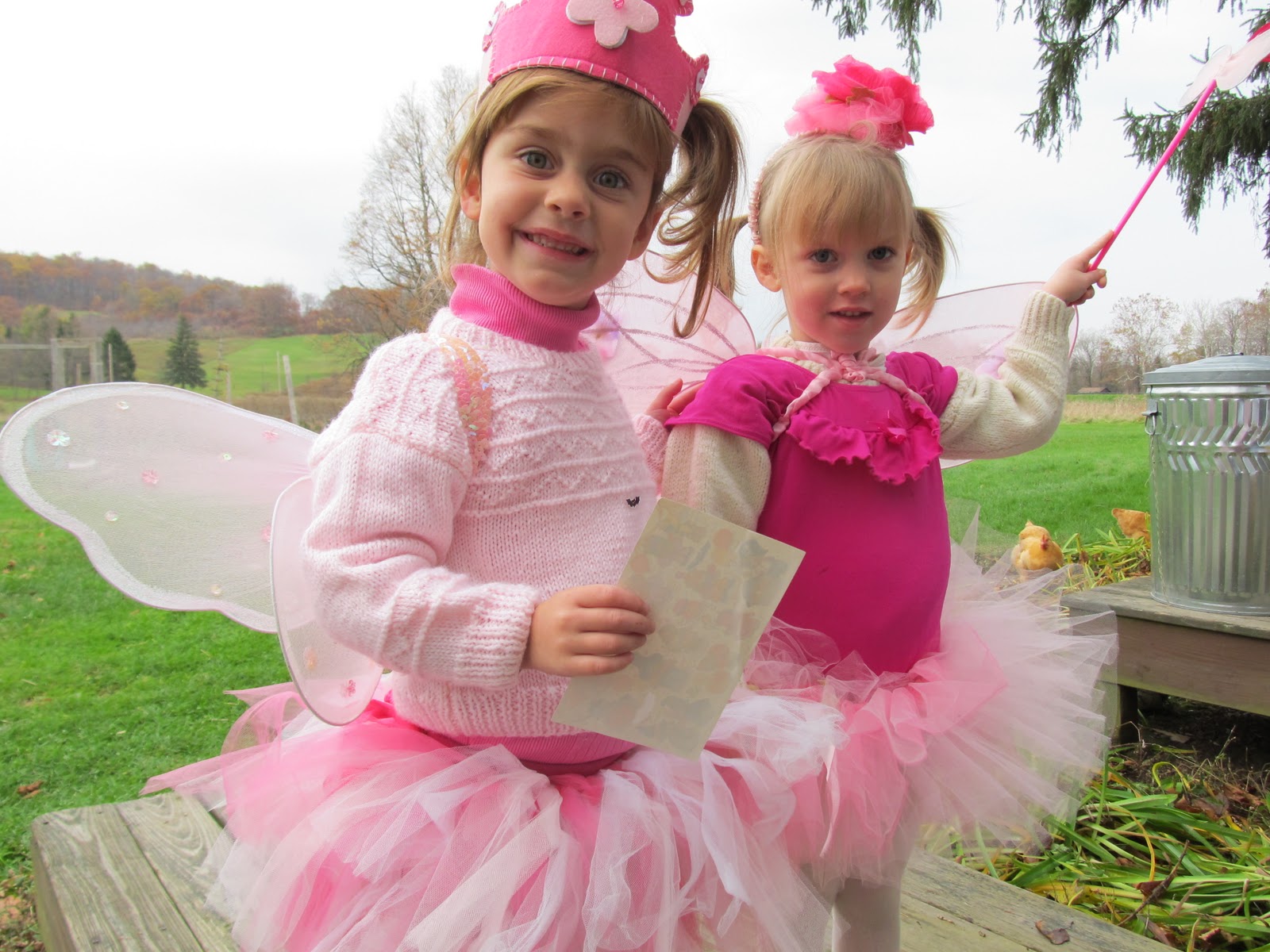
dylan wanted to wear the entire contents of the dress-up trunk:  i could be a doctor ballerina!  a chicken fairy!  a blutterfly princess!  people are going to freak out when they see my costume.

that's my girl.

pink ribbons and hot glue fixes, tulle skirts and gossamer wings and we. are. ready.


friends drop by:  redskins baller, hunter, another butterfly princess ballerina!

and a fancy nancy ghost.

(not the ghost of fancy nancy, mind you.  that would be morbid.)

{i don't exactly see the difference, either.}

we drive into town.  it's like stars hollow, gazebo and all, but sadly lacking in troubadours.

the babes trick-or-treat along the business district.  one hour of daylight is plenty of time to overfill tiny buckets.

(did you know that, given a choice, tiny ones choose lollipops over chocolate every time?  not to self:  coach them before next year.)

shuffling orange leaves, we walk toward the car.

what do you think about p-i-z-z-a? i spell in stealth mode.

PIZZA!!!!  dylan almost falls off jim's shoulders for the thrill of it.

she is still three years old.  we are in so much trouble.


i wouldn't leave you without pics of a costumed boy-babe

the birthday boy is 2


Related Posts Plugin for WordPress, Blogger...