Thursday

a way in the wilderness


This is my body, broken:
pierced and bleeding, shrouded
in darkness and alone

Eloi, Eloi, lema sabachthani?

Father-forsaken, the Light recedes.  
Rocks cry out, the curtain tears,
brave women do not flee.

This is my Body, broken:
my radiant Church lies 
pierced and bleeding, wounded 
by friendly-fire burn

This sickness shall not end in death

The dead are raised, the blind will see and 
you, love, shall be healed (only say the Word).
You are No Longer Deserted, re-created, 
the very image of God

See, I am making a way in the wilderness,
streams in the wasteland

Hephzibah, my delight: rend your heart 
and not your garments. Rend your heart 
and not your brother. Every blood
soaked strand is fuel for the fire

Take off the grave clothes

Put on the new self and arise. Only
love will bind my Church in perfect unity.
Bind up the brokenhearted and return 
to me, the Spirit poured-out-still.

There is one Body and one Spirit; to 
one hope were you called. At 
one Table we celebrate your redemption

As the Father has sent me, so I am sending you

I Am the Word, calling 
life from formless void.
I Am the Truth, revealing
the invisible God is Love.

Unbound, embody your blessing:
light up the darkness, Beloved.

Do this in remembrance of me


Reworked from the archives, for weary hearts. Image: purolipan

to one hope She presses


There is a time to kneel and a time to stand, and we stand for the Gospel and the Nicene Creed. With red prayer book in hand or heart, we recite the words that crossed the lips of fourth century Christians and rise today in congregations across the globe. 
We believe in one holy catholic and apostolic Church.
We believe together and affirm it as one, unlike the “I” of the Apostles Creed I grew up memorizing, the “I” of Protestant work ethic and personal salvation. With the Nicene Creed, we gather and we believe, we empty-nesters and octogenarians, families, friends, blue bloods, and the 47%.
There are times we believe on each other’s behalf, like the men who brought their friend to Jesus, lowering him through the roof tiles: “When Jesus saw their faith, he said to the paralyzed man, ‘Son, your sins are forgiven.’” It was their faith that sparked his healing, body and soul.
I believed for you when your heart was fearful. You believed for me when my foot slipped. We steady the knees that give way; we speak and believe.
We believe in one holy catholic and apostolic Church.
We recite the Creed every Sunday, even when the diocese schismed and hearts rent. It was a divorce from which our community has yet to fully recover.
But there were streams amid desert as saints kept their watch. The men’s Bible study never stopped gathering at the Christian camp for coffee and prayer. The generous buoyed the struggling, as always, and we celebrated, grieved, and served together, because there’s always been more that unites us than that which divides. Christ’s diasporic Church is catholic still.
We believe in one holy catholic and apostolic Church.
We speak the words like prophesy. Like the Word, we exhale life, ordering the chaos. There is
One Lord
One faith, to
One hope are we called
One baptism
One Body, many gifts.
One Giver
One work
One Table
One Church
Jim Wallis is known for saying, “Hope is believing in spite of the evidence and watching the evidence change.”
We do believe, LORD. Help us overcome our unbelief.


Monday

and the beat got sicka

On my nightstand:

At the Dark End of the Street: Black Women, Rape, and Resistance: A New History of the Civil Rights Movement from Rosa Parks to the Rise of Black Power. This book is incredible, and I'm only a few chapters in. A painful (and potentially triggering) read, certainly, but it tells a crucial side to the civil rights movement that is largely missing from popular history, illuminating many of the activists, newspapers, and organizations that fought tirelessly against sexualized violence and for racial justice. Many thanks to Austin Channing Brown who tweeted the NPR piece on Parks' activism that led me to track it down.

The Fault in Our Stars undid me. I can't recall sobbing at a novel like that since Bridge to Terabithia when I was ten. It's a good one, particularly if you have a fondness for catharsis or YA fiction.

We've also been reading lots of kids' lit. Our library is always such a treasure, but when the weather's this terrible, it's a lifeline for which I am tremendously grateful.

On TV:

My favorite show right now, hands down, is Pretty Little Liars. Make of that what you will, but if you've never seen it, I'm jealous that you have four seasons on which to potentially binge, while I have to wait a whole week for one measly hour. It's a soapy teen mystery set where I grew up, everyone has glorious hair, and it's pretty much the best.

I'm so glad Scandal returned, but I wish the Gladiators would get back to working cases, cuz I'm not here for President Fitz's White House woes. Or Quinn. She may even be worse than Fitz.

Jessica and I've been watching Veronica Mars, swooning over Logan, and getting pumped to see THE! MOVIE! that Kickstarter built. Yasssss.

In my ears:

Mostly Beyoncé and entirely too many pre-school singalong renditions of Let It Go. Live Decemberists in the car. Rinse. Repeat.

On the interwebs:

On the blog:

We celebrated six years here. (What.) I wrote about baptized abuse apology and the dawn of something better. And I had posts up at A Deeper Story (Out of Ash) and one at Missio Alliance for their Christianity & Violence Series (Christians, Stop Shooting Our Wounded).

[I did pick party favor winners and will be notifying/mailing shortly: Sarah H, Diana, Christina, and Alyssa. Thanks, everyone!]


On the home front:

Dylan is six, and James is four. We seem to be growing out of some of the eating battles and power struggles and discovering a happy new normal, and it's a beautiful thing. Also, they are now both old enough to go to the YMCA's monthly babysitting night and our friend's weekly youth club, which means that Jim and I have gone out more in the past few weeks that we have in the entire first few years of parenting. Having big-little kids is a game-changer, man. Love.

We booked a house with friends on the Jersey Shore for August. Dreaming of bay view balconies and warm sand beaches and remembering it won't be snowy and sub-zero forever.

Fifteen chirping baby chicks camped out in our bathroom 'til the weather warms:


On the horizon:

Spriiiiiiiing. (Let it be, Lord.) Lent. Mah birthday! Tapping trees. Reading Micha Boyett's Found. Seeing Arcade Fire--with tickets I won:) It's gonna be a good March.

What are YOU looking forward to? Did you watch the Oscars last night? I thought it was a really fun show, even though I've barely seen any of the recognized movies. What was your favorite film/dress/speech/anything? What are you reading, watching, or smitten with of late?


What I'm Into  
{image: ModernGrandma on Etsy}

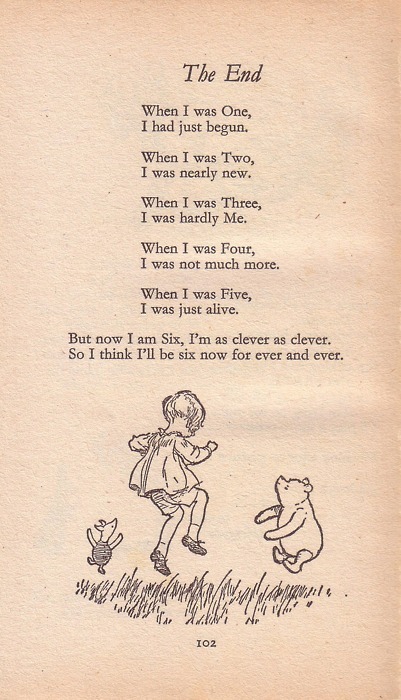
now we are six {with party favors}


The Smitten Word, like our firstborn, is a kindergartner. Seven hundred seventy six posts (with a little help from my friends) was never something I fathomed when I began writing here on a whim six years ago, but this remains a favorite space to flex my creative muscles and connect with you. The early years had more parenting and natural living, but we've always wrestled together with embodied faith, poetry, feminism, media literacy, peacemaking, justice, and what it looks like to be the Church.

I'm grateful to everyone who's been along for the ride. You make it fun, and to say thanks, I've got a few party favors up for grabs. Leave a comment, and I'll pick a few winners at random on Thursday at midnight. Happy Monday, friends.


hard copy of The Fault in Our Stars
12 oz coffee, porch-roasted by Jim
1/2 pint maple syrup, tapped in our yard


Wednesday

out of ash


The trunk is full of clothes for the Salvation Army, and the recycling overflows. Mail piles, junk drawers, closets, toy bins: it’s all fair game. I’m the culling, sorting, take-no-prisoners arranger of disorder.

Well, today I am. Even Type Bs have their breaking point, somewhere between la vie boheme and utter chaos, and I found mine sometime after the furnace broke and the vomiting started.

Three day weekends aren’t the same once you have kids. I mean, it’s a long weekend all right, but not like it used to be when we’d stay out late, just us, and linger in bed all day next. These days, Jim works weekends, and I’m home with the monkeys, who are too sick for adventuring but not too sick to bicker and pick each other raw.

Try as I may, I can’t make them calm their hearts, but if my counters are clear, perhaps I’ll calm mine. Our house, which lately looks like it’s been hit by a tornado, is a metaphor for every furious squall I can’t control, so I’m starting with what I can. One shelf. One dresser. One pantry.

We lit a bonfire with the Christmas tree and toasted marshmallows in the flickering blaze. I’m tackling my temper next. Every blood-soaked strand is fuel for the fire.

Forget the former things;
do not dwell on the past.
See, I am doing a new thing!
Now it springs up; do you not perceive it?
I am making a way in the wilderness
and streams in the wasteland. (Isaiah 43:18-19)

A way through the wilderness. Streams amidst the wasteland. I’m trusting spring lies waiting beneath winter’s dormancy and toasting to cleared clutter, setting fires, and the new life which arises out of ash.

Friday

tell it & think it & speak it & breathe it

[Content note: abuse apology, victim blaming, rape, child abuse]


I'm not much of a crier, not typically. Although my heart could burst sometimes for how deeply I feel injustice, my eyes are far more likely to flash with anger, passion, or mischief than spill hot with tears. And yet yesterday found me weeping, racked with sobs twice. I cried reading The Fault in Our Starsand later upon receiving a maddening email from a stranger.

He had written a post condemning scripture's Esther for joining a pagan king's harem and bed. According to the writer, she could and should have refused the king to keep herself "pure," and failing to do so made her a "complicit adulterer." Nevermind that one was a powerful sovereign and Esther a foreign girl descended of political captives, or that women were considered men's property and without rights, or that the modern concepts of consent and bodily autonomy didn't even exist. (They barely exist now, particularly in many Christian circles!)

[You can read the post here, but know it may be triggering. It's worth noting (although the author doesn't) that the post's parenthetical note appeared this week and was not original to the piece.
The author unconvincingly suggests that believing Esther to be anything other than sexually sinful requires believing in perfect heroes, and oddly, he then paints abusers as "monsters", as if abusers (or abuse/rape apologists for that matter) are not also the sorts of ordinary people we know, work with, and love.
Abuse is predatory, devastating, and unconscionable, surely, but conceiving it as something committed exclusively by monsters leads us to disbelieve victims. ("But he's such a nice guy/ talented man/ respected leader! You must be confused/ overreacting/ imagining things/ lying.") The late addendum doesn't rectify the post's mixed and destructive teachings about gender, sin, and sexuality.]

The author illustrates his point with the story of a woman who was raped as a teenager by her uncle. According to the author, the woman felt complicit in her uncle's abuse of her and found hope in the story of Esther, whom God used despite her "brokenness." The author initially presented this narrative of child victim complicity not only as fact(!) but as something seemingly intended to encourage and teach a lesson: even the most sexually compromised sinners can be redeemed! Glory!

The post had me shaking when I read it the first time and again this week when a new comment addressed to me hit my inbox. This theology isn't just bad: it's abuse apology and victim blaming cloaked in the language of religiosity and grace.

Sexual abuse survivors who have been sinned against require no one's forgiveness. We who miscast blame, heap shame, and side with the powerful and the perpetrators--we are the ones in need of repentance and atonement.

***

When reading Dylan Farrow's description of being abused by her father, Woody Allen; the Vanity Fair profile from 1992; or the recent shitstorm of doubt passing itself off as objectivity, my heart breaks into a million pieces for all the hurting kids who are never to blame for what happened to them, for the ones who never tell, and for those who did and we chose not to believe.

We have a daughter named Dylan, too. At six, she is a voracious reader with sea-green eyes, a playful imagination, and an startlingly sharp mind.

The dark outside is thick like smoke, and I choke to find my breath.

***

The author of that post sent me an email explaining that my comments were deleted because I used "inflammatory language." Perhaps I could have worded things a little differently, he suggested, in order to appear less harsh and encourage more dialogue in his comment section. He even supplied a sample script I could have used.

His email was extraordinarily polite and quite nice in fact, but it was also an outrageously silencing and presumptuous adventure in missing the point. I had been careful with my words. In print, I am nearly always careful with my words. (It is a significantly more difficult task in speech!) I hadn't called names, assigned motives, attacked anyone's character, or engaged in any otherwise untoward rhetorical tactics.

The thing is, I have zero desire to engage in a dialogue about whether or not survivors are complicit in their own rape and abuse, because survivors are not complicit in their rape or abuse. Rapists and abusers are the ones to blame for raping and abusing. Full stop. No apology.

Is that harsh? I can think of a number of things that are considerably harsher, particularly sexualized violence and the cultures and theologies that support, excuse, and enable it to hide and even, to thrive.

When what we are taking about is young people coerced into abusive, exploitative, non-consensual, illegal, and violent sexual experiences, I have an exceptionally hard time imagining that God cares much about optimizing niceness or even fostering dialogue.

The love of Christ looks far less like monitoring language for civility and more like identifying and subverting oppressive power dynamics, holding abusers accountable, supporting (not re-victimizing!) survivors, and transforming rape culture into something far more reminiscent of the resurrecting, upside-down Kingdom of God.

***

I cannot change, control, or be held responsible for another's actions; I am solely responsible for my own. This realization can be tremendously liberating (particularly within purity culture that blames women for men's sins), but as parents it can be extremely hard to accept that we cannot control either what our children do or what happens to them.

We cannot shield them from every shadow or protect them from every harm, but we can raise our voices (and a ruckus if need be). We can grieve each other's pain and celebrate each other's joy.

We can't stop the darkness from falling, but we can kick at it 'til daylight bleeds though.

We can listen to survivors. We can trust children. We can light candles and a better way together.

Children of the Light,
love the day and Dayspring
and each one as ourselves:
beloved, transforming, and renewed
like the dawn of something better

Thursday

detox {on conflict, criticism, & who writes the history}


Innumerable blog posts, tweets, and think pieces churned out over the past few months offer blazing indictments of "toxicity" in progressive Christian and secular feminist online spaces. As someone who follows conversations in both niches and writes on faith and feminism, I'm particularly interested in how this trend plays out in parallel.

No one would argue the fact that the climate online can and does become hostile sometimes, but in fairness, so can the climate of the local bar, the church down the road, and my own home, if I'm honest. Sin is hardly native to the internet; humans behave badly everywhere.

I have no interest in the defense of personal attack, which has no fruitful place online or anywhere else. But I do tire of how easily and often honest disagreement and even the most careful criticism are conflated with bullying and among Christians, with sin, particularly when those pointing fingers have a stake in propping up the status quo and less-than clean hands.

The Power of Language & Discipline of Criticism


Receiving criticism is never fun, and it can take a personal toll. But it also comes with the territory of offering one's work and words for public consumption. Everyone love accolades, but critique is the other side of the coin. Public ideas invite public responses. It's is the nature of the medium.

We seem to understand this as a community when we're the ones talking back to corporations, politicians, megapastors, and gatekeepers. We laud the democratizing power of social media when our little words are heard, shared, and go viral, but how quick we are to cry foul when the tables turn and our own ideas inevitably come under scrutiny. I'm just the Little Guy, the Good Guy! Critique ought to be reserved for the Big and the Bad, right?

But media is media, no matter the scope, and each of us is accountable for the words we share, Joe Politician as well as Jane Blogger. If we want the platforms and re-tweets (and paychecks and book deals), we've got to accept that criticism is par for the course. Critique can't just be acceptable when we engage and hateful when she does, prophetic when it's our side holding the mic and the spotlight but nasty if it's them, (particularly if they are women of color). It's neither fair nor honest to assign malicious motives to anyone else's critique or to hold my own critics to different standards than I keep for my team, my friends, and myself.

Words shape reality, and Christians who worship Jesus the Word who spoke creation into being ought to understand this better than anyone. Feminists who recognize that "mankind" isn't inclusive language or can deconstruct modesty debates in their sleep, should not recoil if it's pointed out that our own language is transphobic, ableist, or otherwise harmful.

The Enemy Within


Our fight is not against people. Feminists don't fight men; we fight the patterns of patriarchy entrenched in our culture's discourse, institutions, and practices. Similarly, Christians affirm that "our struggle is not against flesh and blood" and that sin is as present in power and systems as human hearts (Eph 6:12).

Oppression. Injustice. Selfishness. Sin. Patriarchy. Racism. Violence. These are The Enemy, and they are in all of us to varying degrees. Contrary to popular belief (and privileged distress), critique is not synonymous with nitpicking, infighting, backbiting, or catfighting. We who've read movie reviews, written blue books, studied the liberal arts, or learned a bit about media literacy should recognize this. Criticism is a discipline about analysis and even reform, illuminating patterns that we might acknowledge and dismantle the systems that keep us in chains and inhibit shalom in our communities.

White supremacy doesn't crumble if people stop using slurs or because white people adopt black babies, just like sexism didn't end when women got the vote. The work of intersectional feminist or liberationist criticism is to connects the dots, identifying the persistent and systemic patterns that elevate some voices while punishing others, and illuminating another way.

I critique to make the invisible visible. There is power is naming, not to demonize but to demonstrate that words matter and that with them we can speak life or death. I don't believe in heroes or monsters; the potential for both is in all of us, and criticism of my work or behavior is not an indictment of me as a person, even if it hurts.

All The Feels 


Feelings are important, and feelings make us human, but feelings are an insufficient gauge of the whole truth of any given situation. When I am criticized, I might feel embarrassed, frustrated, or angry. I might believe I am being criticized unfairly, and the tenor or passion of someone's disagreement might make me feel uneasy, but "bullied" and "attacked" are not feelings but verbs. Feeling bullied or attacked is not equivalent to actually being bullied or attacked, and if we're going to introduce those accusations, we better be prepared to back them up. Similarly, feeling ashamed or uncomfortable is not sufficient evidence that another's critique is shaming.

I am responsible for my words and actions, including the harm they cause that I never intended. (No one gets up in the morning with "Marginalize people!" on their to-do list.) I am accountable because my words, behavior, and even inaction can reinforce oppression and stereotype without my meaning to. (How often are men described as hysterical, catty, or contentious? Are white people generally spoken of as savage or brutal?) Misogyny and racism are rooted not in personal prejudice but in structures, institutions, and systems.

I am also responsible for expressing my own feelings in healthy ways. Perhaps I need sabbath, exercise, or firmer boundaries. Maybe I need to stick up for myself, broach a tough conversation, or get away for a while, but ultimately I cannot hold other people responsible for how I feel. Validating each other's feelings is a key aspect of being a good friend or partner, but we don't owe that to strangers on the internet.

Feeling bad isn't a solid indicator that I've been wronged. Discomfort with conflict is valid, but it can't on its own reveal whether a conflict is toxic. Feelings matter, certainly, but using my feelings to derail a conversation that isn't chiefly about me isn't fruitful or fair.

Being implicated in racism, homophobia, sexism, etc. feels crappy, but dealing with that is on me. Can I choose to see beyond my own feelings far enough to care about another's person's lived experience of injustice and my own hand in it? In the grand scheme of things, oppression is significantly weightier than personal discomfort, and compassion looks like acknowledging not just feelings but the uneven and unjust power dynamics at work.

Talking Back


Ugliness exists online, as everywhere, but it's careless to conflate strong words with malice or something that requires cleansing (by whom?). "Women of color know that when we leave the supposed 'toxicity' of Twitter, we are not going to another place that is not toxic" (Kaba & Smith).

There are no shortcuts around conflict to unity, and not every conversation that makes my heart race must be indicted or shut down. Sometimes I just need to shut down my computer and take a deep breath. Other times I need to commit to listening and doing the work, because "constructive crisis and tension are necessary for growth," and constructive is rarely akin to comfortable.

Having or cultivating distance from anger isn't any sort of inherent moral good either. Anger is often fruitful, catalyzing desperately needed change. It's not a fruit of the Spirit, but then neither is apathy, protected power, or smarm.

Social media is eroding the control the gatekeepers have historically held to shape the dominant narrative, and that's a breath of fresh, decidedly non-toxic air. The democratizing effect trickles down, and it's foolish to presume I should be able to control the narrative either. I can't always foresee what will happen after I press publish, which can be paralyzing or scary, but it also can be tremendously liberating.

Any of us is able to talk back, and each one speaks on her own behalf. There is power in naming and in making the invisible visible. Speak we life.


Interlopers on Social Media: Feminism, Women of Color and Oppression
The Color of Toxicity
Bigotry Not Twitter Makes Feminism Toxic
White Supremacy's Toxic Twitter Wars #BigBadWolfFeminism
This Is What I Mean When I Say White Feminism
words like weapons - poem

[shared with #FaithFeminisms]

on parenting honey badgers


I’m a natural with babies. One of those earth mama types with babes slung close to my heart, I rarely met an early parenting problem that couldn’t be fixed or at least ameliorated by proximity to my breasts. Put a boob on it! It was like having a superpower.

But even as a kid, I was good with babies. I had a booming babysitting business watching the neighbors’ infants and toddlers for three bucks an hour. The 90s were different, man. Back then, no one thought twice about leaving tiny children in the charge of an eleven year old Girl Scout with a child care badge.

Connecting with teens comes pretty easily to me, too. I’ve got over a decade of youth ministry under my belt and know more ice breakers and group facilitation tricks than a lifetime of team-building retreats could exhaust. Nerdy, popular, troubled, loud–I enjoy all sorts of teenagers, even the stinkiest, silliest middle schoolers.

Babies are my jam. Awkward adolescents are my cup of tea. But little kids are tough. Little kids are honey badgers. I have two whom I love fiercely, and parenting them is the hardest thing I’ve done in my life.

–

Remember My So-Called Life? “I cannot bring myself to eat a well-balanced meal in front of my mother. It just means too much to her.”

Grungy, melancholic Angela Chase captured my fifteen year old heart, and she’s still among my most beloved fictional characters. But these days, I feel a peculiar affinity for her mom Patty, because Kyrie eleison, being on the other end of that fork might just be the death of me. My fiercely independent children never met a hill they weren’t willing to die on, and our dinner table is their perennially favorite last stand. At just four and six, their sighing, eye-rolling, and angst-y tears could give Emmy-winning Claire Danes a run for her money.

If they aren’t battling each other, it seems like they’re double-teaming me. Some days feel acutely like a losing battle I never signed on for. Aren’t we supposed to be on the same side?

**

They came by their stubbornness honestly. Truth be told, their mama can be something of a honey badger herself. Parenting is nothing if not a mirror into our own flaws and inadequacies.

But slowly, we’re learning–the whole Team Paul. To control our emotions and manage our tempers. To listen with our ears and move our feet. Speaking kind words or holding our tongues, we’re helping with our hands (or keeping them to ourselves). We’re turning and walking another way into repentance, forgiveness, new mercies, and resurrection.

Learning to love with our whole selves, we honor God with all that we are. Honey badger ferocity included.
Related Posts Plugin for WordPress, Blogger...